- All
- Product Name
- Product Keyword
- Product Model
- Product Summary
- Product Description
- Multi Field Search
Views: 0 Author: Site Editor Publish Time: 2026-01-07 Origin: Site

The global beverage industry continues to grow as consumers demand safer, fresher, and more diversified juice products. Behind every bottle of juice on the shelf lies a highly coordinated and technology driven Juice Bottling Line that transforms raw fruit into a sealed, market ready product. For manufacturers, understanding each stage of the bottling process is essential to improving efficiency, maintaining hygiene, and ensuring consistent product quality.
In modern factories, the Juice Bottling Line is no longer a simple filling operation. It integrates extraction, thermal treatment, precision filling, controlled sealing, and automated packaging into a seamless workflow. Advanced systems such as the Liquid Nitrogen Dosing Machine, Bottle Inverted Sterilizers, and Bottle Spray Cooling Tunnel play critical roles in preserving freshness, extending shelf life, and meeting strict food safety regulations.
A Juice Bottling Line works by systematically extracting juice, ensuring microbiological safety through pasteurization, filling bottles with high precision, sealing them securely, and preparing them for distribution using automated packaging systems designed for efficiency and hygiene.
This article takes you inside the bottling process to reveal how each stage of the Juice Bottling Line operates, why specialized equipment matters, and how integrated solutions help producers achieve high output with stable quality. From juice extraction to final packaging, every detail contributes to the success of the entire Juice Bottling Line.
Juice Extraction: The First Step
Pasteurization Ensuring Safety
Filling: Precision is Key
Capping: Sealing the Freshness
Labeling and Packaging: Final Touches
Conclusion
Juice extraction is the foundational process in a Juice Bottling Line, where raw fruits are processed to obtain clean, uniform juice suitable for downstream treatment and filling.
In a complete Juice Bottling Line, extraction begins with raw material handling. Fruits are sorted, washed, and inspected to remove impurities before entering extraction equipment. This step is critical because the quality of extracted juice directly influences taste, color, and stability. Mechanical extractors are designed to maximize juice yield while minimizing pulp damage and oxidation.
Different juice products require different extraction methods within the Juice Bottling Line. Citrus fruits often use reaming or pressing systems, while apples and berries may use crushing and belt pressing. Each extraction method is selected to balance efficiency with product integrity. A well designed Juice Bottling Line allows flexibility to adapt extraction parameters based on fruit variety and production capacity.
After extraction, the juice typically passes through filtration or clarification stages to remove excess solids. This prepares the juice for pasteurization and filling. At this stage, integration with the Juice Bottling Line ensures smooth flow control, reduces manual handling, and maintains hygienic conditions that meet international food processing standards.
Pasteurization in a Juice Bottling Line is the key process that eliminates harmful microorganisms while preserving flavor, nutrients, and color.
Once extracted, juice enters the pasteurization section of the Juice Bottling Line. Heat treatment is carefully controlled to destroy bacteria, yeast, and molds without compromising product quality. Common methods include plate heat exchangers and tubular pasteurizers, both designed for continuous operation within the Juice Bottling Line.
Modern Juice Bottling Line configurations often integrate Bottle Inverted Sterilizers after hot filling. In this process, filled bottles are inverted so that hot juice contacts the inner surface of the cap and neck, ensuring complete sterilization. This method enhances product safety and reduces the risk of post filling contamination.
Temperature control and holding time are critical parameters in the Juice Bottling Line. Automated monitoring systems ensure consistent pasteurization, while data logging supports traceability and regulatory compliance. Proper pasteurization not only guarantees safety but also extends shelf life, making it a cornerstone of any efficient Juice Bottling Line.
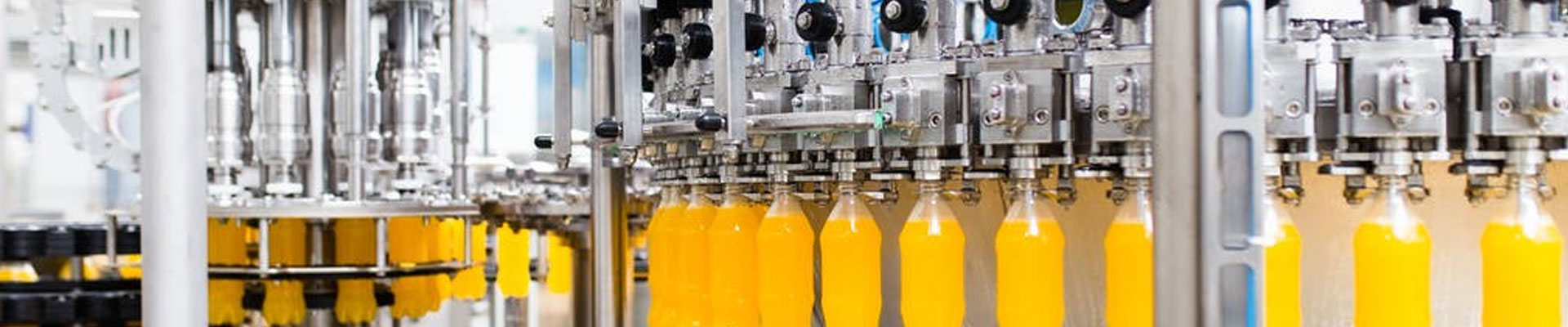
Filling is the most precision driven stage of the Juice Bottling Line, ensuring accurate volumes, minimal product loss, and hygienic transfer into containers.
In the filling section of the Juice Bottling Line, juice is transferred from storage tanks into bottles using volumetric or flow based fillers. High precision filling valves are designed to handle different viscosities while preventing foaming and spillage. Consistent fill levels are essential for both product appearance and regulatory compliance.
The integration of a Liquid Nitrogen Dosing Machine within the Juice Bottling Line significantly improves filling performance. By injecting a small amount of liquid nitrogen before capping, internal pressure is created, strengthening bottles and reducing oxygen levels. This technology helps preserve juice freshness and improves packaging stability during transportation.
Automation plays a vital role in modern Juice Bottling Line filling systems. Sensors detect bottle presence, adjust filling speed, and ensure synchronization with upstream and downstream equipment. This level of precision reduces waste, improves efficiency, and supports high speed production without sacrificing quality.
Capping in a Juice Bottling Line ensures airtight sealing, product integrity, and long term freshness throughout distribution.
After filling, bottles immediately move to the capping station of the Juice Bottling Line. Caps are automatically fed, positioned, and tightened with controlled torque to ensure consistent sealing. Proper capping prevents leakage, contamination, and oxidation, which are major risks in juice products.
In hot filled Juice Bottling Line applications, Bottle Inverted Sterilizers work in coordination with the capping system. Once capped, bottles are inverted to allow hot juice to sterilize the inner cap surface. This process is especially important for juices without preservatives, as it enhances microbiological safety.
Quality control mechanisms within the Juice Bottling Line verify cap presence and tightness. Faulty bottles are automatically rejected, ensuring only properly sealed products proceed to the next stage. Reliable capping protects brand reputation and reduces product recalls.
Labeling and packaging complete the Juice Bottling Line by transforming sealed bottles into retail ready products.
Once capped, bottles pass through cooling and drying sections, often using a Bottle Spray Cooling Tunnel. This equipment gradually reduces bottle temperature after hot filling, preventing deformation and maintaining label adhesion quality. Controlled cooling is essential for bottle stability and visual appearance.
Labeling systems within the Juice Bottling Line apply pressure sensitive or shrink sleeve labels with high accuracy. Automated alignment ensures brand consistency and compliance with labeling regulations. Integrated inspection systems detect misaligned or missing labels before packaging.
Packaging systems then group bottles into cartons, trays, or shrink wrapped bundles. A well designed Juice Bottling Line coordinates labeling and packaging speeds to avoid bottlenecks. Efficient end of line automation reduces labor costs, improves throughput, and ensures products are ready for storage and shipment.
The Juice Bottling Line is a sophisticated system where every stage plays a vital role in product quality, safety, and efficiency. From juice extraction and pasteurization to precision filling, secure capping, and automated packaging, each process must work in harmony to deliver consistent results.
Advanced technologies such as the Liquid Nitrogen Dosing Machine, Bottle Inverted Sterilizers, and Bottle Spray Cooling Tunnel enhance performance across the Juice Bottling Line. These solutions help manufacturers meet growing market demands while maintaining high standards of hygiene and efficiency.
By understanding the secrets inside the bottling process, producers can optimize their Juice Bottling Line for higher output, lower waste, and better product stability. A well integrated Juice Bottling Line is not just a production tool, but a strategic asset for long term success in the competitive juice industry.